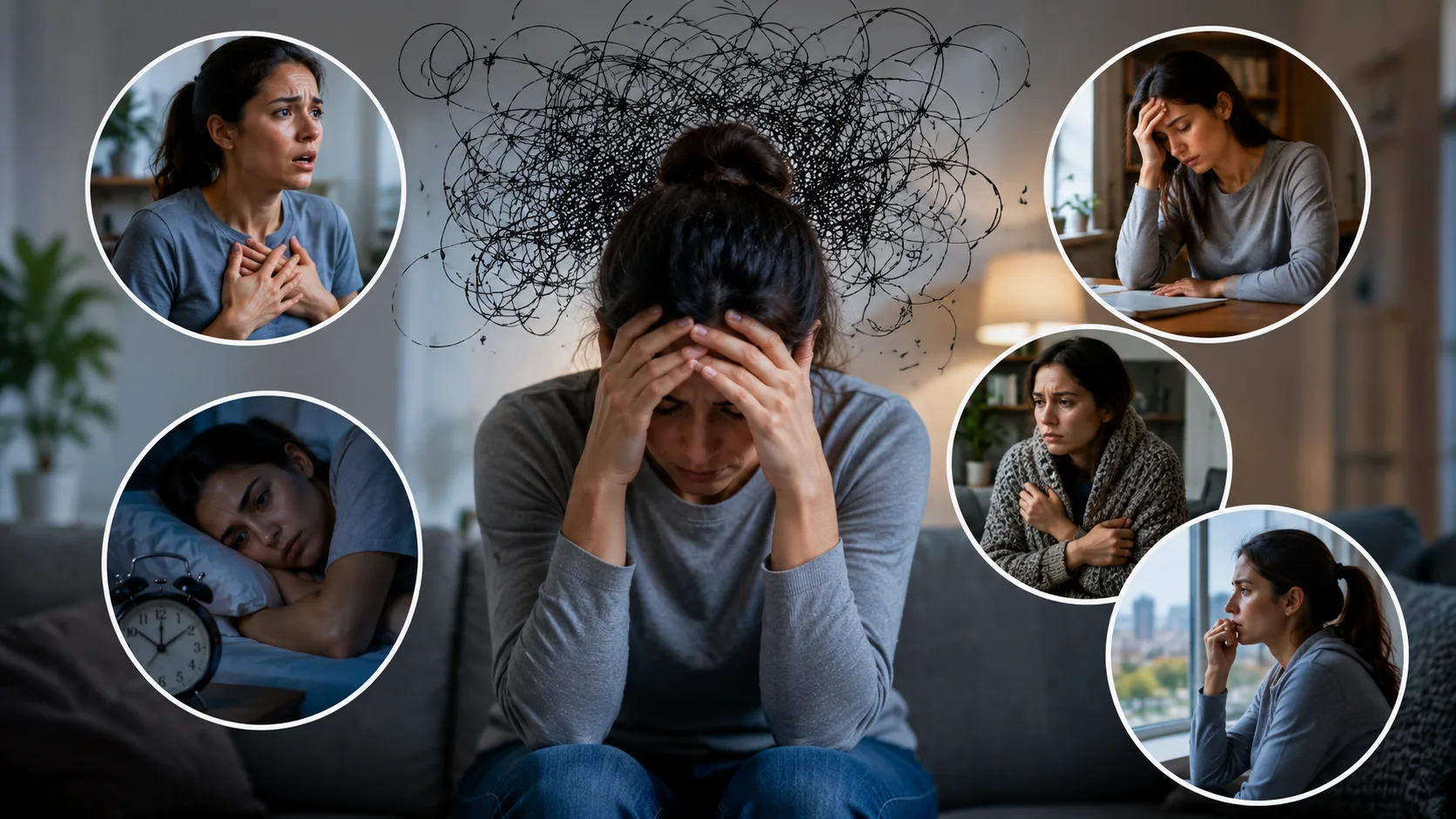
The five signs you have anxiety are persistent worry that won’t switch off, physical symptoms like a racing heart or tight chest, trouble sleeping, difficulty concentrating, and avoiding situations that make you uncomfortable. When these happen regularly and affect your daily life, it may be more than just stress.
How Is Anxiety Different from Everyday Stress?
Stress usually has a clear trigger and fades once that trigger is gone a deadline passes, a difficult conversation ends, and the tension eases with it. Anxiety doesn’t need a trigger to stick around. It can persist even when nothing is actively wrong, showing up as a constant low hum of unease that colors ordinary moments. The key difference isn’t intensity, it’s duration and disconnection from an obvious cause.
Sign 1: Persistent Worry That Won’t Go Away
What does persistent worry actually feel like?
It rarely feels like one big worry sitting in your mind. Instead, it feels like a background current that keeps running under everything else until you finish worrying about one thing and it quietly shifts to the next. Work, health, relationships, money the subject changes, but the underlying tension doesn’t switch off. People often describe it as never getting a moment of actual mental quiet, even during activities that used to feel relaxing.
Sign 2 : Physical Symptoms Without a Clear Cause
Why does anxiety cause physical symptoms?
Anxiety isn’t only a thought pattern, it’s a physical state. The body’s fight-or-flight response activates even when there’s no real danger, releasing stress hormones that cause a racing heart, a tight or heavy chest, headaches, stomach issues, muscle tension, and unexplained fatigue. Because these symptoms feel physical, people often visit a doctor for heart or digestive concerns before anxiety is ever considered as the cause.
Sign 3 : Trouble Sleeping
Is waking up anxious a sign of anxiety?
Yes. Anxiety often shows up most clearly at night, when there are fewer distractions to compete with racing thoughts. The mind won’t quiet down at bedtime, sleep is light or interrupted, and many people wake up already feeling tense as if their body started the stress response before the day even began. Over time, this leads to a cycle where poor sleep makes anxiety worse, and anxiety makes sleep worse.
Sign 4 : Difficulty Concentrating and Irritability
Can anxiety make you irritable?
Yes. When the nervous system stays on low-level alert for extended periods, it drains the mental bandwidth normally available for focus and patience. This often shows up as difficulty concentrating on simple tasks, losing your train of thought mid-sentence, or feeling scattered. The same depleted bandwidth can also make people snap at small things that wouldn’t normally bother them.
Sign 5 : Avoiding People, Places, or Situations
Is avoiding things a sign of anxiety?
Yes, and it usually starts small. A skipped social event here, a canceled plan there, staying silent in a meeting instead of speaking up. Each individual instance seems minor, but the pattern gradually expands the list of situations that feel “too much” keeps growing. This avoidance often provides short-term relief, which is exactly why it tends to increase over time rather than resolve on its own.
When Does Anxiety Become a Disorder?

Anxiety crosses into disorder territory when three things line up together: frequency (it happens most days, not just occasionally), intensity (it’s hard to control or calm down once it starts), and impact (it interferes with work, relationships, sleep, or daily functioning). Occasional worry before a big event is normal. Worry that persists regardless of circumstances and disrupts daily life is the line clinicians look at.
What Should You Do If You Recognize These Signs?
If several of these signs feel familiar and have been going on for weeks rather than days, it’s worth taking seriously rather than waiting it out. Helpful starting points include talking to a primary care doctor to rule out physical causes, considering therapy (particularly CBT, which has strong evidence for anxiety), and building basic lifestyle supports like consistent sleep, reduced caffeine, and regular movement. If anxiety is starting to affect your daily life, our anxiety and depression care program can help you figure out the right next step.
Frequently Asked Questions
Is it possible to have anxiety without knowing it?
Yes. Many people experience anxiety as physical symptoms, irritability, or overthinking without labeling it as anxiety, especially if they’ve lived with it long enough that it feels normal rather than like a distinct problem.
Can anxiety cause physical pain with no medical reason?
Yes. Anxiety commonly causes headaches, chest tightness, stomach pain, and muscle soreness through prolonged muscle tension and stress hormone activity, even when medical tests come back normal.
How long do anxiety symptoms need to last before it’s considered a disorder?
Clinically, generalized anxiety disorder typically requires symptoms most days for at least six months, though shorter, intense episodes can still warrant support and evaluation.
Is feeling irritable all the time a sign of anxiety?
Yes. Constant irritability often reflects a nervous system that’s chronically overstimulated, leaving less patience and mental capacity for everyday frustrations.
Can you have anxiety but still function normally at work?
Yes, this is common and sometimes called “high-functioning anxiety.” People can perform well externally while internally managing constant worry, tension, or perfectionism.
What is the difference between a panic attack and anxiety?
Anxiety is typically a sustained, lower-level state of worry or tension, while a panic attack is a sudden, intense episode with sharp physical symptoms that usually peaks within minutes.
Can anxiety go away on its own without treatment?
Mild, situational anxiety often eases once the triggering situation resolves. Persistent or worsening anxiety usually needs active management therapy, lifestyle changes, or medical support to improve.