Your liver runs quietly in the background of your body. It filters blood, stores energy, and builds proteins you need to stay alive.
Most people never think about it until a doctor brings up a number on a report. Damage there tends to sneak up on you. Years pass with zero symptoms while scarring or fat quietly builds.
A FibroScan gives your doctor a way to check on your liver without a needle or a cut.
If you’ve got an appointment coming up and no idea what happens once you walk in, here’s the breakdown about “FibroScan Liver Test: How It Works and What to Expect.”
What Is a FibroScan Liver Test?
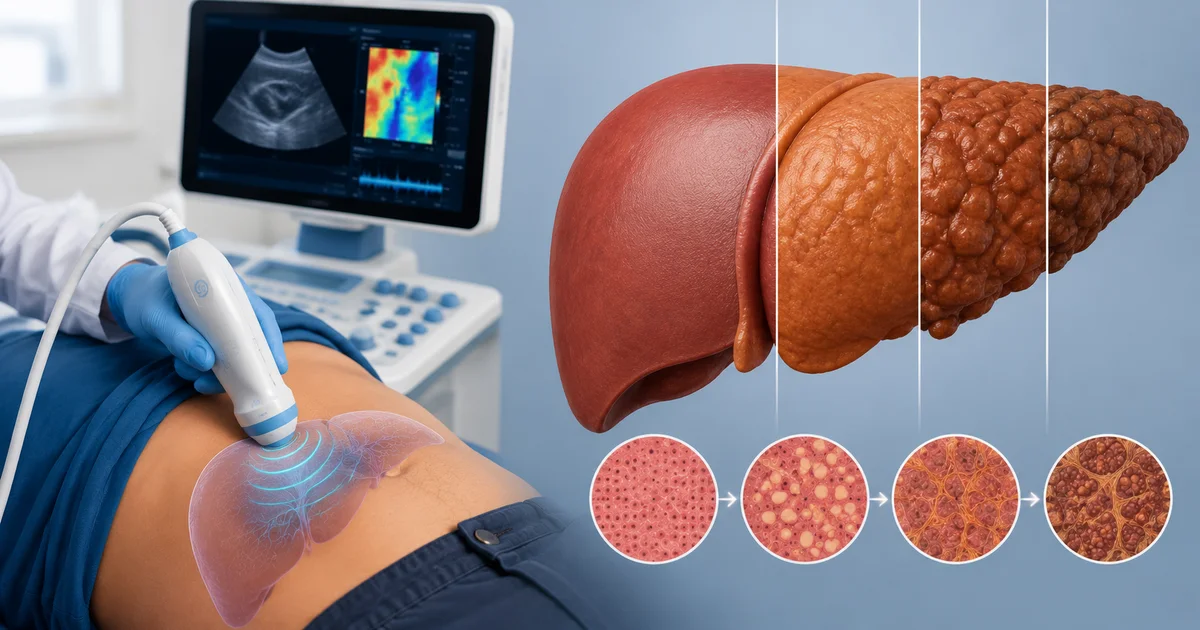
Think of it as a quick health check for your liver, nothing more dramatic than that. The machine looks for two main things: scarring, which doctors call fibrosis, and fat sitting inside the liver itself.
The mechanics are simple.
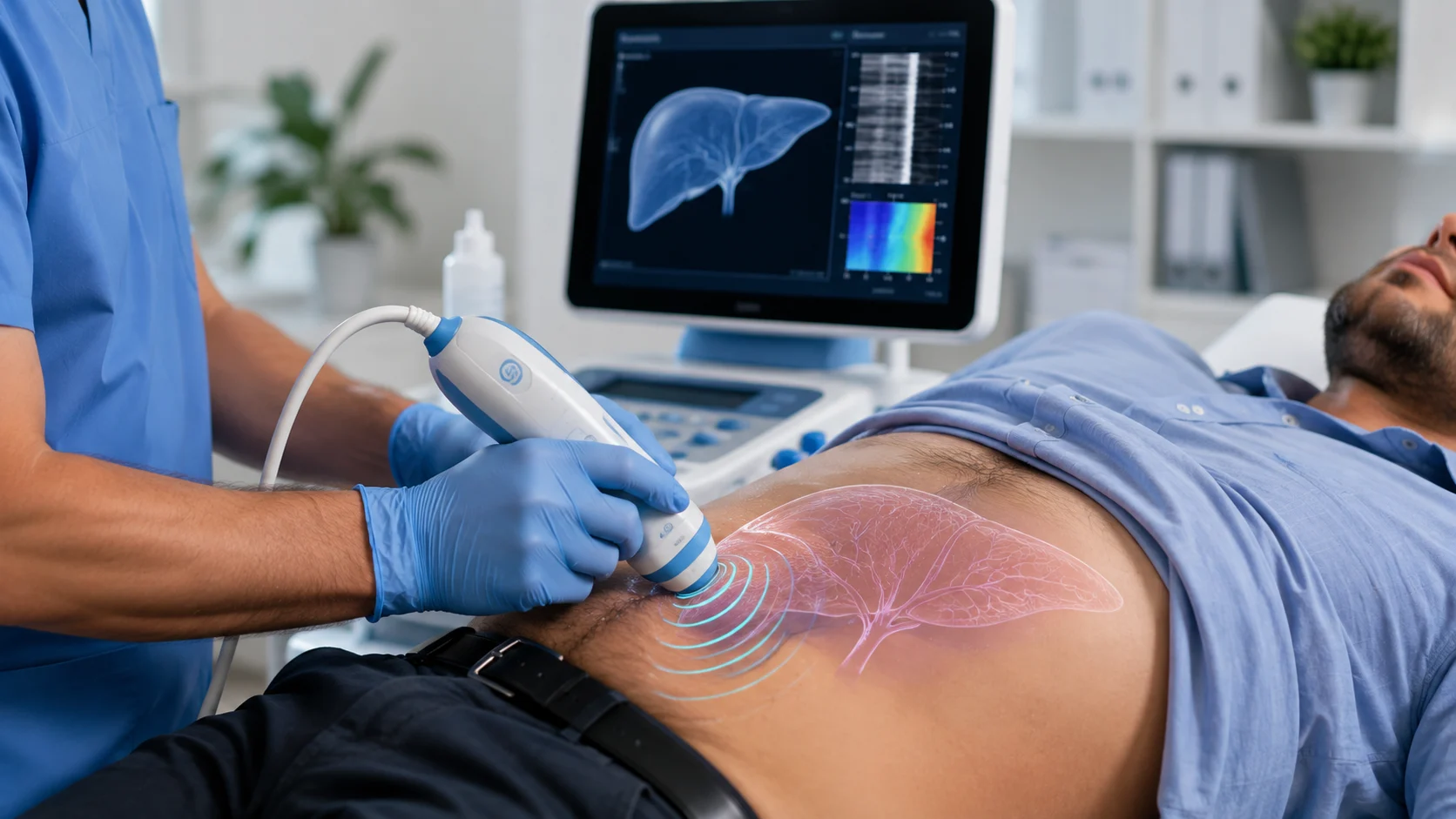
A probe sends a tiny vibration through your skin and clocks how fast it travels through your liver tissue. Firm, scarred tissue lets that vibration move quickly. Soft, healthy tissue slows it way down. Your doctor takes that speed and converts it into a score.
There is no blood draw. No biopsy needle. You lie on a table, a technician sets a probe against your side, and within a few minutes the whole thing is over.
What Does a FibroScan Liver Test Actually Measure?
Two numbers come out of this scan, and they’re not measuring the same thing at all.
First is liver stiffness. Picture scar tissue as tough and rubbery compared to soft, healthy tissue. The scan measures firmness by tracking sound wave speed. Faster speed, stiffer liver, more scarring.
Second is the CAP score, and this one’s about fat. Fat often shows up inside liver cells long before any scarring starts, so this number flags trouble early, sometimes years before stiffness would.
Doctors read both numbers side by side. A single number gives you half the picture at best. Together, they show how far things have gone and whether fat is the main culprit behind whatever’s happening in there.
What Conditions Is a FibroScan Liver Test Used For?
Doctors order this scan for a long list of reasons:
- Fatty liver disease, whether alcohol caused it or not
- Hepatitis B and hepatitis C
- Cirrhosis, meaning heavy, long-term scarring
- Damage from years of heavy drinking
- Liver problems tied to obesity or diabetes
- Watching liver health over time during treatment for a chronic condition
Sometimes the trigger is an odd blood test result nobody expected. Sometimes it’s risk factors piling up, heavy drinking, extra weight, diabetes, a past hepatitis diagnosis. Doctors also bring patients back for repeat scans months or years later just to see which direction things are moving.
How to Prepare for a FibroScan Liver Test?
Prep here is light, but a few small habits change your result more than people expect.
- Don’t eat anything for at least three hours before your appointment. Water’s fine. Food shifts blood flow to your liver and skews the reading, sometimes by a lot.
- Wear something loose. The technician needs open access to your right side, right under your ribs.
- Cut back on drinking in the days beforehand. Ask your doctor for the exact window since it varies by situation.
- Say something if you’ve got a pacemaker or another implanted device. It sometimes changes whether this scan works for you.
- Bring your medication list and any past liver results if you’ve got them handy. Your doctor connects the dots faster with that history in front of them.
If you skip these steps, you risk a number that doesn’t match reality, which just means more appointments later.
What Happens During a FibroScan Liver Test?
Most people walk in expecting a longer ordeal than they get. Ten to fifteen minutes, start to finish, and that includes getting positioned on the table.
You lie flat on your back, right arm stretched above your head. That opens the gap between your ribs so the probe has a straight shot at your liver.
A technician spreads a bit of gel on your skin below the right ribs. It helps the sound waves travel cleanly from the probe into your body without losing signal.
Then the probe goes against your skin, a button gets pressed, and a gentle vibration fires into your liver. The machine tracks how fast it bounces back.
That step repeats around ten times, each one in a slightly different spot nearby. Multiple readings average out better than trusting a single measurement.
Your doctor pulls the numbers up on screen right after, usually while you’re still lying there.
Each reading feels like a light tap on your skin, almost like someone flicking you gently with a finger. Nothing sharp, nothing that lingers. No sedation, no downtime, nothing to recover from. You sit up, grab your bag, and go back to whatever you were doing before.
Understanding Your FibroScan Liver Test Results
Two numbers land in your chart afterward, and each covers different ground.
Liver stiffness gets measured in kilopascals, written as kPa. It is measured from 2 kPa to 75 kPa.This tells you about scarring specifically.
Here is what the results say:
- 2 to 7 kPa (F0–F1): Normal or mild/no scarring.
- 7.0 to 9.5 kPa (F2): Moderate scarring.
- 9.5 to 12.5 kPa (F3): Severe scarring.
- Above 12.5 kPa (F4): Advanced scarring or cirrhosis.
This test also measures the CAP score, measured in decibels per meter (dB/m), which tracks fat instead. The Controlled Attenuation Parameter (CAP) score ranges from 100 to 400 dB/m to measure fat buildup:
- Below 238 dB/m: Normal (little to no fat).
- 238 to 260 dB/m: Mild fatty liver (S1).
- 260 to 290 dB/m: Moderate fatty liver (S2).
- Above 275–290 dB/m: Severe fatty liver (S3).
Low CAP means barely any fat buildup. Higher CAP points toward fatty liver disease, with severity climbing right along with the number.
Your doctor walks you through exactly where you land and what happens next based on your specific case. Borderline scores sometimes trigger a repeat scan just to double-check before anyone acts on the number.
What Can Affect FibroScan Liver Test Accuracy?
A few things throw off results, and your doctor watches for these while reading your score.
- Extra weight around the midsection puts more tissue between the probe and your liver, changing how the sound waves travel. Probes built for larger patients handle this fine, so it’s not a dead end.
- Eating close to your appointment raises blood flow to the liver and pushes stiffness numbers higher than they should be.
- Fluid buildup in the abdomen, called ascites, blocks sound wave transmission outright. The scan often becomes unreliable until that fluid gets addressed first.
- A recent illness or flare-up causes temporary inflammation, and that spikes stiffness readings without any real scarring behind it. It settles back down once the inflammation clears.
- The technician’s skill matters here too, more than people assume. Finding the right spot and angle for the probe takes practice, and sloppy placement gives sloppy numbers.
- Rib spacing varies from person to person. Tighter spacing between ribs makes probe placement trickier and sometimes weakens the quality of the reading.
Doctors weigh all of this before trusting a final score. One strange number doesn’t mean much on its own, so don’t panic over a single odd result without context from your doctor.
FibroScan Liver Test vs. Liver Biopsy: What Is the Difference?
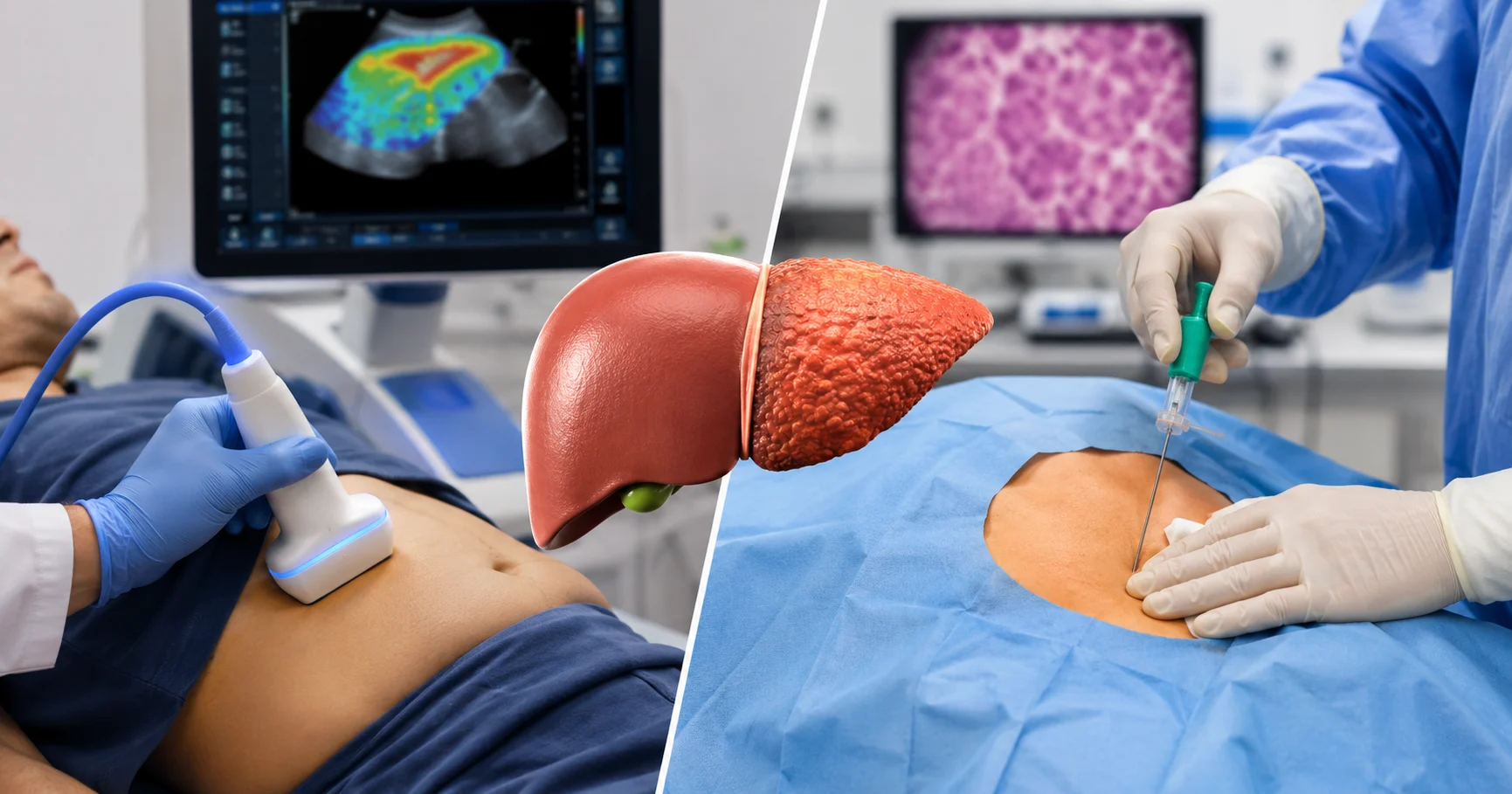
Liver biopsies were the standard for checking scarring long before this scan existed. A needle goes through your skin, pulls out a small piece of liver tissue, and a lab studies it under a microscope.
A FibroScan skips almost every part of that process.
No needle touches you. Sound waves pass through your skin instead of a needle reaching into your liver tissue directly.
You don’t need pain medication either. Biopsies usually need local anesthesia and sometimes light sedation. A FibroScan needs neither one.
Recovery isn’t a thing here. Walk out right after your scan finishes. A biopsy means hours of monitoring afterward, then rest at home once you’re cleared to leave.
Risk drops sharply too. Biopsies carry small risks like bleeding, infection, or accidental injury to something nearby. A FibroScan carries none of that.
Results show up faster as well. FibroScan numbers appear on screen within minutes. Biopsy samples travel to a lab first, and that takes days before anyone hears back.
Repeating the test is easy with a FibroScan. Doctors run it again and again across months or years to track change. Repeat a biopsy, and you’re taking on the same risks every single time, so doctors keep those to a minimum.
Biopsies still earn their place though, especially when a doctor needs actual tissue to rule out other liver diseases beyond fibrosis. But for watching scarring and fat levels over time, a FibroScan gives your doctor nearly the same insight with far less discomfort and risk attached.
Can FibroScan Liver Test Scores Improve Over Time?
Yes, they can, and this matters a lot if your first scan came back worse than you hoped.
Fat buildup usually responds fast to changes in daily habits. Dropping weight, cutting sugar and processed food, moving your body regularly- all of it lowers fat inside liver cells within a few months. Plenty of people see their CAP score fall noticeably after six months of sticking with these changes.
Mild to moderate fibrosis sometimes improves too, particularly if it’s caught early. Your liver holds a real ability to repair itself once whatever’s causing the damage gets removed. Quitting alcohol, treating hepatitis, losing weight, keeping diabetes under control, all of these give your liver room to heal.
Advanced fibrosis and full cirrhosis don’t follow the same rules. Once scarring reaches that stage, reversing it gets much harder, and treatment shifts toward stopping further damage rather than undoing what’s already there.
Doctors keep ordering repeat scans for exactly this reason. Numbers trending down confirm your treatment is working. Numbers climbing tell your doctor to change course before things get worse.
Bottom Line
A FibroScan gives you a clear look at your liver’s health. In fifteen minutes, you get two numbers. Those numbers show you how much scarring and fat sit inside your liver right now.
Catching problems early matters a lot here. Fat buildup often goes down fast once you change your diet and move more. Mild scarring can heal once you stop what caused it. Wait too long, though, and scarring turns into something you can’t undo. It only gets managed after that point, not fixed.
Did your results come back higher than you hoped? Don’t panic. Don’t guess what the numbers mean on your own. Talk to your doctor. Go through your score together. Build a plan that fits your liver, not some average that doesn’t match your case. Later scans show you if that plan is working or not.
Your liver rarely warns you before real damage starts. A FibroScan is one of the easiest ways to check on it early, before it has to shout for your attention.
At Conscious Medicine, we help you understand more than just the number on your report. Our team sits down with you and explains what your FibroScan results mean for your body. Then we build a plan around what’s actually causing your liver stress, whether that’s your diet, toxins around you, a virus, or years of extra weight you couldn’t shake. A number by itself doesn’t help much.
Frequently Asked Questions
Can eating before a FibroScan liver test affect the results?
Yes. Food raises blood flow to your liver, pushing your stiffness reading higher than it should be. Stick to water, and leave at least three hours between your last meal and the appointment.
Is a FibroScan liver test painful or safe?
No pain involved. You’ll feel a light tap on your skin during each reading, nothing more than that. No known risks, no needles, safe enough for repeated use over years without concern.
How long does a FibroScan liver test take?
The scan itself takes ten to fifteen minutes. Add check-in time, and a quick conversation with your doctor about the results, and your whole visit usually wraps up inside thirty minutes.
Can FibroScan liver results improve with lifestyle and diet changes?
Yes, especially the fat score. Weight loss, better food choices, and regular movement lower fat buildup within months. Mild fibrosis sometimes improves too once the underlying cause gets treated.
Does a FibroScan liver test involve radiation?
No. This test uses sound wave vibrations, the same basic idea behind an ultrasound. Zero radiation exposure, which makes it safe for frequent checks whenever your doctor wants one.