By Dr. Tru Nguyen, MD, IFMCP. Functional and Integrative Medicine Physician, Conscious Medicine, Milton, GA.
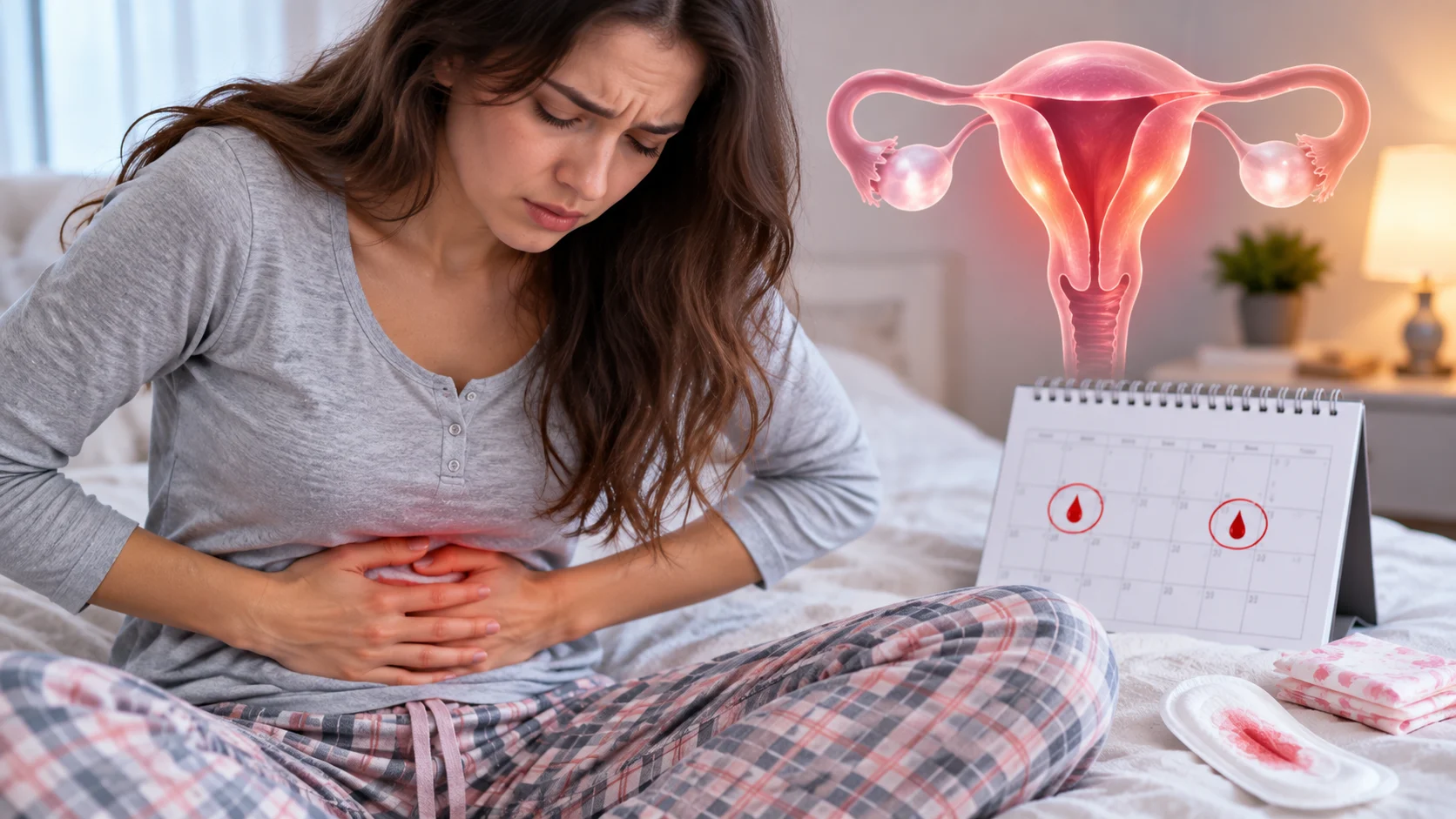
You planned on one period this month. Somehow you got two. Now it’s late, you’re on your phone, and you’re trying to figure out if something’s actually wrong.
Short version: this happens a lot, and most of the time it’s fine. A cycle that runs 21 to 24 days can fit two periods into one calendar month without any drama at all. But if you bled less than 21 days again after your last period started, that’s a different situation. Doctors have a name for it: abnormal uterine bleeding, and it’s worth looking into.
Below, we’ll cover both. What’s actually normal, what tends to cause a second bleed, what functional medicine testing looks at, and when it’s time to just call your doctor instead of googling at midnight.
KEY TAKEAWAYS
- A normal cycle runs 21 to 35 days. Two periods can land in one month within that range.
- Bleeding under 21 days after your last period falls outside normal.
- Common causes: short cycles, stress, birth control changes, thyroid issues, PCOS, fibroids, perimenopause.
- Talk to a doctor if this repeats for two or three cycles, if bleeding is heavy, or if you have pain, dizziness, or a positive pregnancy test.
Is It Normal to Have Two Periods in One Month?
Count your cycle the right way first. Day one is your first day of full bleeding. It ends the day before the next period begins.
Doctors consider 21 to 35 days a healthy range, per the National Institutes of Health. International guidelines say 24 to 38. And here’s something that surprises a lot of people: only about 16 percent of women have an actual textbook 28-day cycle. That number comes from a 2020 study that tracked over 600,000 cycles through a period app.
So say your cycle’s 23 days, and your period starts on the 1st. The next one shows up on the 24th. Two periods, same month, nothing wrong with that at all.
It’s normal when:
- Your cycle stays 21 days or longer.
- The second bleed acts like your usual period.
- It’s a one-time thing, and your cycle bounces back to normal.
It’s worth attention when:
- The two bleeds land less than 21 days apart
- It keeps happening for two or three cycles straight
- The second bleed is heavier, lighter, or shorter than usual
- There’s new pain, clotting, fatigue, or dizziness with it
Two Periods in One Month vs. Breakthrough Bleeding: What Is the Difference?
Here’s something worth knowing. A lot of “two periods in one month” stories are actually one real period plus a bout of breakthrough bleeding. Different causes, different fixes, so it’s worth telling them apart.
A real period comes after ovulation. Progesterone climbs, then drops, and the lining sheds fully. Three to seven days, starts light, ramps up, tapers off. Cramps and PMS usually tag along for the ride.
Breakthrough bleeding looks nothing like that. Lighter, often pink or brown, gone in a day or two, barely enough to need a pad. Shows up mid-cycle, after sex, or just randomly.
Then there’s ovulation spotting, its own separate thing. Estrogen dips right after the egg’s released, and some women get a day or two of light spotting around day 12 to 16. Nothing to worry about there.
Best move: track both. Start date, how many days, how heavy, what color. Three months of that tells your doctor way more than a single blood test ever will.
What Causes Two Periods in One Month?
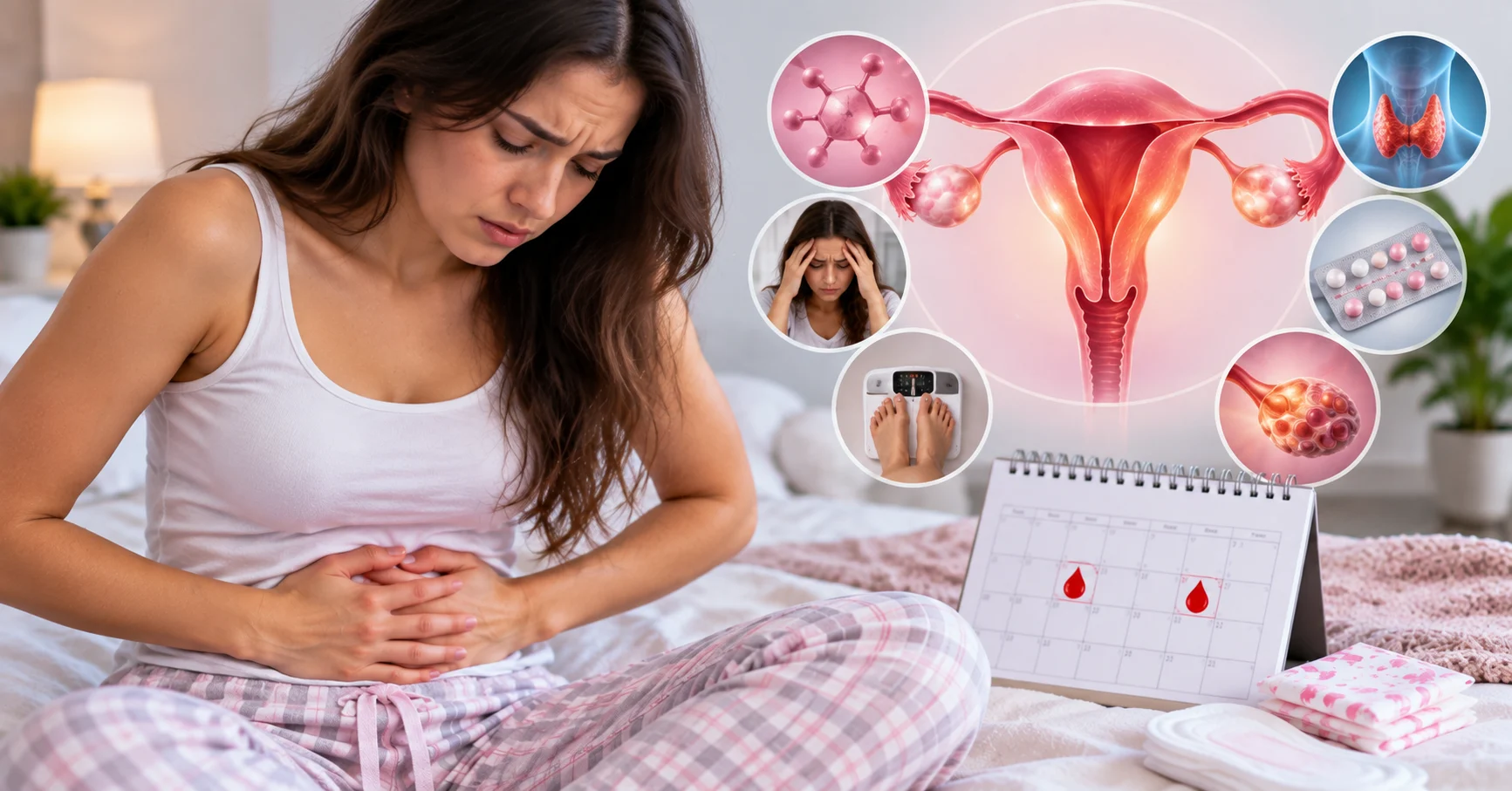
Here are the reasons behind two periods in a month:
Short Menstrual Cycle (21-Day Cycle)
Plenty of women just run short naturally. A 21 to 24 day cycle is often just genetics, nothing that needs fixing.
Age plays into this too, slowly. A 2019 Nature study found cycle length drops roughly 0.18 days every year between 25 and 45. So by your late 30s, that cycle you used to count as 28 days is edging closer to 25.
Teenagers sit at the opposite end. The Office on Women’s Health says it can take up to three years after a first period before things settle into any kind of rhythm. Two periods in one month is actually pretty common in those early years.
There’s also a short luteal phase to consider. That’s the stretch between ovulation and your period, normally 12 to 14 days. When progesterone’s low, it can shrink to 8 or 9 days, and the next period just shows up earlier than expected.
Hormonal Fluctuations
Your cycle runs on constant communication between your brain, ovaries, and uterus. When that gets out of sync, ovulation gets delayed or skipped entirely. Anovulation, in medical terms.
Why does that mean extra bleeding? After ovulation, the corpus luteum makes progesterone, which keeps the lining stable. No ovulation, no progesterone, and estrogen just keeps building the lining with nothing holding it together. Eventually, pieces of it break down on their own, unpredictably. Sometimes that means bleeding twice in a month.
Low progesterone compared to estrogen is one of the patterns we see constantly in women with irregular cycles. Shows up clearly on timed hormone testing, and it usually improves once you get at the actual cause.
Stress and Lifestyle Factors
Stress hits your cycle through cortisol. High cortisol shuts down the brain signals, GnRH, LH, FSH, that trigger ovulation. So ovulation moves around, or skips a month entirely.
Other things that throw a cycle off:
- Not eating enough, or a sudden drop in calories
- Overtraining without enough recovery
- Bad sleep or working night shifts
- Flying across time zones
- Fast weight changes, up or down
- Getting sick, even just a bad cold
One rough month usually causes one weird cycle. Constant stress causes a constant pattern.
Birth Control Changes
Starting, stopping, or switching birth control is honestly one of the top reasons for extra bleeding. Pills, patches, rings, shots, hormonal IUDs- they all mess with the lining. For the first three months on something new, spotting between periods is really common.
Miss a pill, and breakthrough bleeding can show up within a day or two. Stop the pill after years of use, and you might get two or three rocky cycles while your own hormones figure themselves back out.
If bleeding’s still happening past three months on something you’ve been on a while, talk to whoever prescribed it. Usually switching the dose or formula clears it up.
Thyroid Dysfunction
Your thyroid sets the tempo for basically every hormone system in your body, ovaries included. About 1 in 8 women deal with a thyroid issue at some point, and irregular bleeding is often one of the first clues.
An underactive thyroid is tied to heavy periods, missed periods, and spotting. An overactive one shortens the luteal phase, which pulls periods closer together.
Most standard screening just checks TSH. The problem is, a normal TSH doesn’t actually rule anything out. A real panel needs free T3, free T4, reverse T3, and thyroid antibodies (TPO and thyroglobulin). Those antibodies can flag autoimmune thyroid disease years before TSH ever moves.
PCOS
PCOS affects up to 1 in 10 women of reproductive age. Elevated androgens and insulin resistance throw ovulation off. Most women with PCOS go long stretches between periods, but some get hit with the opposite. The lining builds for weeks with no progesterone involved, then sheds in bits and pieces. Ends up looking like two periods crammed into one month, tacked onto a long gap of nothing.
Other clues: acne, extra hair on the face or body, thinning hair up top, weight settling around the middle, trouble getting pregnant.
Honestly, PCOS is as much a metabolic issue as a reproductive one. Blood sugar, insulin, inflammation- that’s what’s really driving it. Fix those, and ovulation often comes back on its own for a lot of women.
Uterine Fibroids or Polyps
Fibroids are non-cancerous growths inside the uterine wall. Polyps sit on the lining itself. Both cause bleeding between periods, heavier flow, and periods lasting past seven days.
Fibroids come with extras too: pelvic pressure, needing to pee constantly, low back pain, pain during sex. They run in families, feed off estrogen, so they tend to grow through your 30s and 40s and shrink once menopause hits.
A pelvic ultrasound picks up both. Endometriosis and adenomyosis cause similar bleeding patterns too, worth mentioning here.
Pregnancy or Miscarriage
Bleeding after a missed or early period sometimes points to pregnancy.
Implantation bleeding shows up 6 to 12 days after conception, light, pink or brown, gone in a day or two. Easy to mistake for an early period.
Early pregnancy loss brings heavier bleeding with cramping, often a week or two after a missed period. Ectopic pregnancy brings bleeding plus sharp pain on one side, shoulder pain, or dizziness. That last one’s an emergency, no debate.
Take a pregnancy test any time bleeding’s off schedule, and pregnancy’s even remotely possible.
Other Causes
Less common, but worth knowing:
- Pelvic infections, including STIs
- Bleeding disorders like von Willebrand disease
- Certain medications, blood thinners, some antidepressants, antipsychotics
- Endometrial hyperplasia, a thickened lining that needs checking out
- Cervical inflammation or growths
Perimenopause and Two Periods in One Month
Perimenopause is the runway before menopause actually hits. Starts in the early to mid-40s for most, sometimes late 30s. Can drag on four to ten years.
Usually the first thing women notice is a shorter cycle. As egg supply drops, FSH rises, follicles mature quicker, and ovulation happens earlier. A 28-day cycle becomes 24, then 22. Two periods a month starts becoming just… normal for a while.
Later on, it flips. Cycles stretch out, periods get skipped, bleeding turns unpredictable in every direction.
Other things that tend to show up:
- Waking at 3 am for no reason
- Hot flashes, night sweats
- Mood swings, anxiety, irritability
- Brain fog
- Weight settling around the middle
- Lower libido, vaginal dryness
You don’t have to just wait this out either. Hormone testing, lifestyle changes, bioidentical hormone therapy when it fits- all of that can help through this stretch.
Risk Factors for Having Two Periods in One Month
You’re more likely to deal with this if you:
- Are under 20 or over 38
- Started, stopped, or switched birth control in the last three months
- Are under a lot of work, family, or emotional stress
- Have a personal or family history of thyroid disease
- Have PCOS, or it runs in your family
- Have fibroids running in your family
- Gained or lost more than 10 pounds recently
- Train hard or restrict calories
- Take blood thinners or psychiatric meds
- Have a bleeding disorder
What Do Frequent Periods Do to Your Body?
Bleeding twice a month carries two consequences worth knowing about.
Iron loss
Every period drains iron. Two a month, that drain doubles. Low iron shows up as fatigue, hair shedding, getting winded on stairs, cold hands, restless legs. Ferritin, the storage form, drops way before a standard blood count would ever catch anemia. We check it in every woman we see with frequent bleeding. Every single time.
Fertility tracking
Unpredictable cycles make ovulation nearly impossible to pin down. Trying to conceive? Frequent periods often mean ovulation isn’t happening, or the luteal phase is too short for implantation to work. Both are fixable once you know what’s going on.
When to See a Doctor for Two Periods in One Month?
One short cycle isn’t a crisis. Book an appointment if:
- Cycles run shorter than 21 days for two or three months straight
- You’re soaking a pad or tampon every hour for two-plus hours
- You’re passing clots bigger than a quarter
- Bleeding runs past seven days
- You bleed after sex
- There’s pelvic pain, fever, or odd discharge
- You feel dizzy, faint, or short of breath
- You’ve got a positive pregnancy test and any bleeding
- You’re over 45, and your pattern just changed out of nowhere
Get emergency care for heavy bleeding with severe pain on one side, shoulder pain, or fainting. Any bleeding after 12 full months without a period counts as post-menopausal bleeding, and that needs to get checked right away.
How a Functional Medicine Workup Finds the Cause?
Most regular doctor visits for irregular bleeding end with a birth control prescription. That regulates the calendar. It doesn’t tell you why your cycle changed in the first place.
At Conscious Medicine, we start with your history and three months of cycle data. Then testing covers the systems most likely involved:
- Full thyroid panel: TSH, free T3, free T4, reverse T3, TPO and thyroglobulin antibodies
- Complete blood count and ferritin for iron status
- Timed reproductive hormones: FSH, LH, and estradiol on day 3, progesterone seven days after ovulation
- DUTCH testing for hormone metabolites and cortisol rhythm, when stress or estrogen metabolism looks like a factor
- Fasting insulin, glucose, and HbA1c for blood sugar and PCOS screening
- Prolactin, DHEA-S, and testosterone
- Vitamin D and inflammatory markers
- Pelvic ultrasound referral if fibroids, polyps, or structural issues are suspected
Results point to a root cause, and the plan follows from there. Sometimes that’s blood sugar and nutrition work for PCOS. Sometimes thyroid support for autoimmune thyroid disease. Sometimes adrenal and sleep work for stress-driven anovulation, or bioidentical progesterone where testing clearly calls for it.
See, how our women’s wellness assessment works
How to Track Your Cycle Before Your Appointment?
Bring data with you. It cuts down the whole path to a diagnosis significantly.
Track at least three cycles:
- Day one of each bleed
- How many days it lasted
- Flow each day (light, medium, heavy) and clots
- Color (bright red, dark red, brown, pink)
- Cramps, breast tenderness, mood changes, headaches
- Sleep, stress, illness, travel, exercise intensity
- Any missed pills or med changes
A free tracking app works fine for this. A note on your phone works just as well, honestly.
Frequently Asked Questions
Can stress cause two periods in one month?
Yes. Stress raises cortisol, which shuts down the brain signals controlling ovulation. Ovulation shifts, or skips entirely, and the lining sheds off schedule. One rough month, one weird cycle usually. Ongoing stress, ongoing pattern.
Two periods in one month, could I be pregnant?
It’s possible. Implantation bleeding happens 6 to 12 days after conception, light and brief. Early pregnancy loss and ectopic pregnancy cause heavier bleeding with cramping. Take a home pregnancy test whenever bleeding’s off schedule, and there’s been unprotected sex.
Is having two periods in one month a sign of perimenopause?
It’s actually one of the earliest signs. Cycles shorten first, as ovaries age and ovulation moves up. Over 38, and your cycle dropped from 28 days to 24 or under? Perimenopause belongs on the list. Testing and symptoms confirm it.
When should I worry about two periods in one month?
Worry less about one weird cycle, more about a pattern. See a doctor if cycles run under 21 days for two or three months, bleeding is heavy or lasts past seven days, or there’s pain, dizziness, or a positive pregnancy test involved.
Can having two periods in one month affect my chances of getting pregnant?
Frequent periods often point to anovulation or a short luteal phase. Both cut the odds of conceiving, since either no egg is released, or the lining sheds before an embryo can implant. Both respond well to treatment once you know the cause.
Take the Next Step
Two periods in one month is your body sending up a flag. Sometimes it’s nothing more than a short cycle. Sometimes it’s thyroid, insulin, stress, or something structural asking to be looked at.
Conscious Medicine serves women in Alpharetta, and greater Atlanta with a root cause approach to hormone health. Book a consultation; bring your cycle notes. We’ll look at the whole picture, not just the calendar.